Thank you!
Your support is sustaining the future of local news in our communities.

Scoville Library talk explores pitfalls and benefits of AI

Scoville Library talk explores pitfalls and benefits of AI

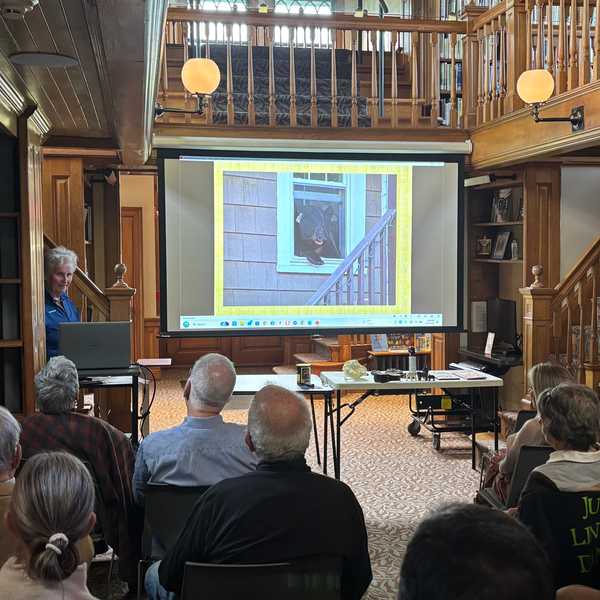
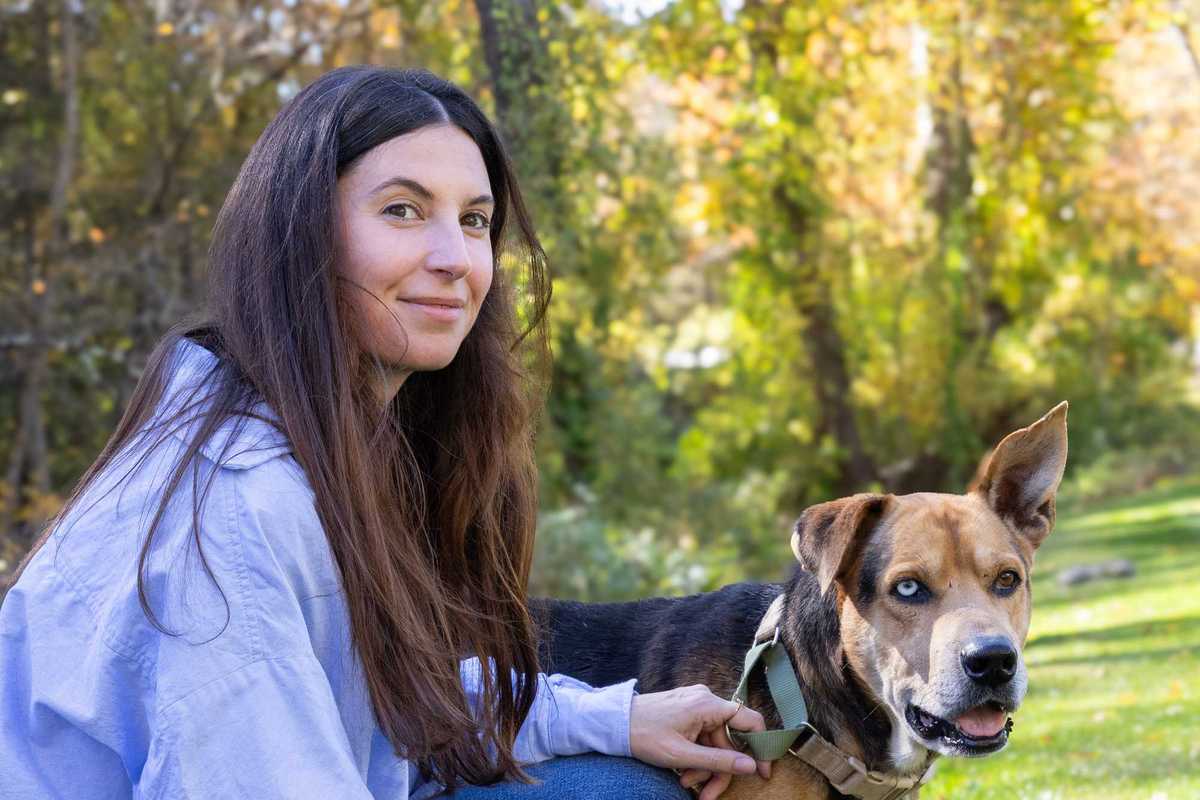
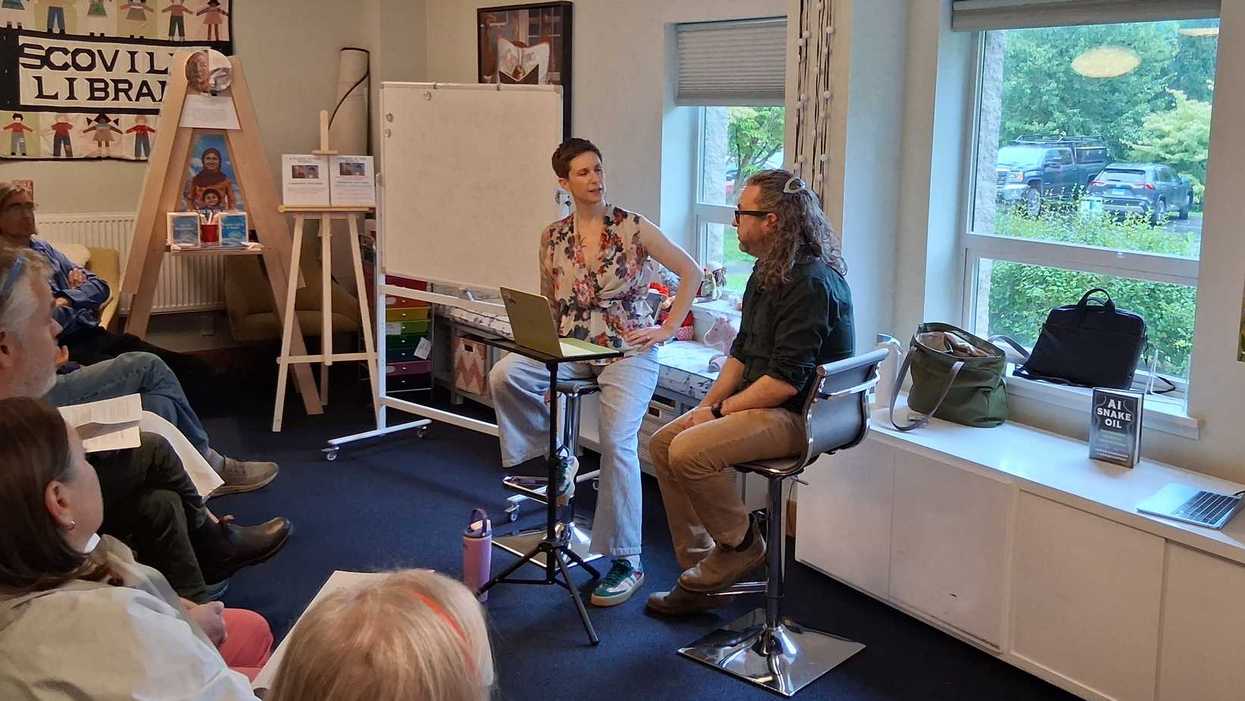
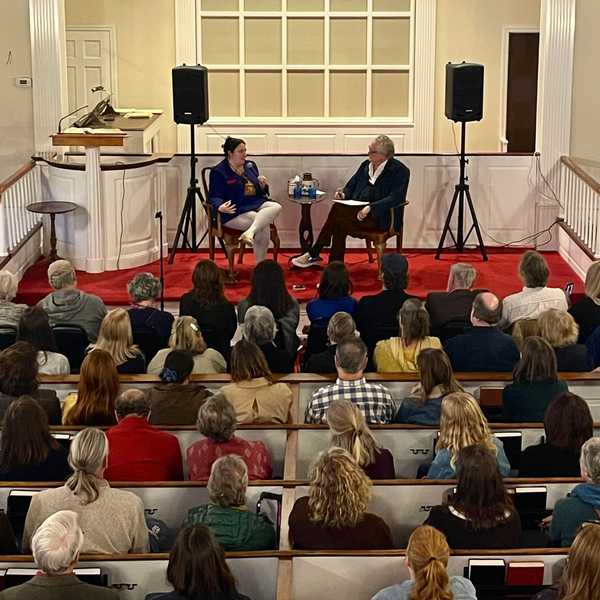
Kat Zdar, left, and Stevo Ledbetter talk about AI.

Patrick L. Sullivan

SALISBURY — The confused and the curious convened at the Scoville Memorial Library on Thursday, Aug. 20 for a freewheeling discussion of the 2024 book “AI Snake Oil: What Artificial Intelligence Can Do, What It Can’t, and How to Tell the Difference” by Arvind Narayanan and Sayash Kapoor.

Leading the discussion were Kat Zdar and Stevo Ledbetter, self-described “tech survivors” with considerable experience in the field of technology. It was the second installment of the discussion.

Zdar said that large language models (LLMs) are not a form of magic.

“People built this,” she said of tools like OpenAI’s ChatGPT. She said LLMs “are good at some things, not so good at other things.”

Ledbetter said artificial intelligence “is a marketing term, intentionally broad and hard to define,” but attempted to define it anyway.

“It’s a computer program that uses massive amounts of data to predict the most probable outcome for a given input,” he said.

One commonly used example of AI, he said, is the predictive text feature on phones and computers.

Zdar then defined what AI is not. “It is not human, magic or free. It is a tool, designed by people.”

AI has considerable potential for causing harm, the speakers said. As an example, Ledbetter asked an AI program the question, “How many rocks should I eat each day?” The answer is “one small one.”

AI reflects the biases of its creator, he continued, and is designed to flatter the user with responses such as, “That’s a really smart question.”

Zdar said AI is not very good at answering questions about current events, because the information hasn’t yet been entered by the very large numbers of data workers worldwide.

Ledbetter said data labor is another problem caused by AI. He said data workers around the world are typically poorly paid and often exploited.

Other pitfalls include skill atrophy. Zdar said people who rely on AI find their ability to do things the old-fashioned way deteriorates.

Zdar said AI is not a math whiz. “AI cannot reliably count or calculate.”

And, in extreme cases, heavy use of AI can produce “AI psychosis,” in which the user’s grip on reality can become badly damaged and distorted.

Zdar said the real risk in AI is people using it for harmful purposes rather than a science fiction scenario of AI “turning into a sentient god-tyrant.”

So what is AI good for?

Zdar provided five examples of helpful uses for AI.

A condolence note when the writer is stuck on the first line. Simple translation, such as “Where is the bathroom?” in another language. Planning a trip. Brainstorming on a subject such as how to raise funds for the local food pantry.

AI users should be aware of its shortcomings and pitfalls and practice basic safety. Zdar and Ledbetter’s list of basic AI hygiene includes keeping data anonymous whenever possible.

Give context when using AI. Good quality information going in means good quality responses coming out.

Along similar lines, users should define the format they want AI to use and ask for adjustments along the way.

And the two big ones:

“Don’t trust, always verify,” said Zdar firmly.

“And don’t use AI for stuff you want to be good at.”
Latest News

“The Divine Sister” comes to Sharon Playhouse for one-night benefit
Playwright and performer Charles Busch is “The Divine Sister.”
Provided

Continuing a popular tradition, the Sharon Playhouse will present a one-performance-only staged reading of “The Divine Sister,” another riotous comic romp by the acclaimed playwright and performer Charles Busch, on Friday, Aug. 28 at 7 p.m.

The play is a wild and witty homage to Hollywood films that feature nuns — from “The Song of Bernadette” and “The Bells of St. Mary’s” to “The Singing Nun” and “The Sound of Music.” It is classic Charles Busch: wickedly funny, gloriously over-the-top and overflowing with theatrical joy.

Keep ReadingShow less

KK Kozik sees things differently

KK Kozik sees things differently

KK Kozik in her studio

Natalia Zukerman
Maybe it takes the ability to interpret what you’re looking at to really see.
— KK Kozik

KK Kozik has a theory about getting older.

“I don’t think you have eyes to see until you have eyes to see,” said the painter. “And maybe it takes the ability to interpret what you’re looking at to really see, and maybe that’s what comes with wisdom.”

Keep ReadingShow less
Lakeville Open Horse Show returns for 69th year

Jazzmine Bone and A Stitch in Tyme power through the Gambler’s Choice run during the 2024 Lakeville Open.

Caitlin Von Graf

For nearly seven decades, the Lakeville Open Horse Show has brought riders, horses and spectators together for a day of competition and community.

This year’s show takes place on Sunday, Aug. 30, at Riga Meadow at Coole Park, 1031 Bengal Amenia Road in Millbrook.

Keep ReadingShow less
google preferred source

Want more of our stories on Google? Click here to make us a Preferred Source.

A new home for contemporary music in Connecticut

This year, the ARChive of Contemporary Music, or ARC, is moving its collection to a permanent home in Ridgefield, Connecticut.

ARC is somewhat hard to imagine. Comprised mainly of huge collections from musicians, archivists, and DJs, it has compiled more than three million sound recordings, consisting of over 90 million songs.

Keep ReadingShow less
A Vietnamese water puppet musical returns to the quarry where it began

“The Magnificent Ms. Pham” combines Vietnamese water puppetry, shadow theater, music and storytelling.

Provided

“The Magnificent Ms. Pham,” the first Vietnamese American water puppet show, is returning to the water where it was born. The perpetual motion puppet show will be at TurnPark Art Space in West Stockbridge, Mass., Aug. 28 and 29, following a sold-out New York City premiere earlier this year. The production was originally developed at TurnPark, where its puppets first danced across the surface of the quarry lake.

Created by Vietnamese American artist Tommy Nguyen and director and designer Doug Fitch, the production tells the story of Nguyen’s mother, Kim Pham, and her journey from Vietnam to the United States. The story moves between memory, Vietnamese history and mythology, and the realities of immigration, following Kim from her childhood in Vietnam through her escape as a “boat person” and eventual life in Houston, Texas.

Keep ReadingShow less
Barry Blitt draws for the Northwest Connecticut Arts Council

Cartoonist Barry Blitt created a design for a limited edition T-shirt for Northwest Connecticut Arts Council fundraiser.

Jennifer Almquist

A drawing by Barry Blitt is recognizable from a distance simply for his line quality and hint of watercolor. Known for his scathing political cartoons, this longtime cover illustrator for the New Yorker has leaned his shoulder in to support the NWCT Arts Council and its Aug. 29 fundraiser at Buck’s Rock Camp in New Milford. Blitt created a design for limited-edition T-shirts that will be available for sale at the event and online at artsnwct.org.

David Remnick, editor of the New Yorker since 1998, called Blitt “One of the greatest political cartoonists of our time.” A native of Canada, Blitt won a Pulitzer Prize for editorial cartooning and has created more than 100 covers for the New Yorker since 1992. Perhaps most memorable is his 2008 iconic fist bump between Barack Obama and Michelle Obama, “The Politics of Fear.” A quarter century of his sketches and drawings are collected in “Blitt: In One Eye and Out the Other,” published by Penguin Putnam. He has created books for children, including “George Washington’s Birthday” and “Once Upon a Time, the End, (Asleep in 60 Seconds).”

Keep ReadingShow less
google preferred source

Want more of our stories on Google? Click here to make us a Preferred Source.

google preferred source

Want more of our stories on Google? Click here to make us a Preferred Source.