SHARON — Farming in Sharon is increasingly at risk due to soaring land prices, a shortage of affordable housing and continued development pressure, residents and planning officials said during a public planning meeting on July 22.
Farmers, landowners and conservation advocates gathered at Town Hall to discuss how the town can better preserve agricultural land as part of its upcoming update to the Plan of Conservation and Development (POCD).
The meeting was the final of four sessions with the Planning and Zoning Commission that invited public input on four key land use issues identified by residents in responses to a survey conducted in the spring. The other three, which were discussed in the three previous meetings, were economic development, conservation and housing.
The public input will help shape the rewrite of the POCD, which state law requires municipalities to review and update every 10 years. Sharon’s current plan is due for revision by the end of the year. Janell Mullen, a land use consultant hired by P&Z to prepare the revision, referred to the document as “a road map for the next 10 years of planning and development.”
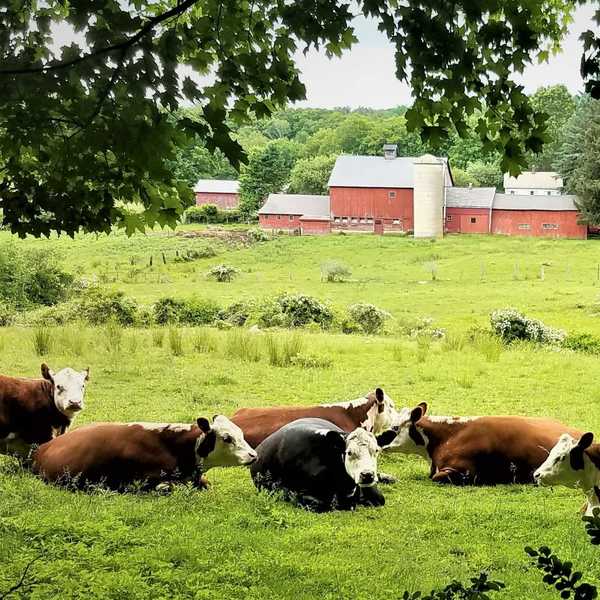
Several participants at the July 22 meeting voiced their desire to see firmer safeguards for the town’s agricultural land, which totals some 4,000 acres, or approximately 11% of Sharon’s total area, become a priority in future changes to town codes.
“There’s no governance by the town that protects it,” said resident Carol Flaton, who serves on the town’s Board of Finance.
Some argued that Connecticut as a whole is not hospitable to farmers, making the town’s role in protecting agriculture especially important.
According to statistics published by the U.S. Department of Agriculture in 2025, Connecticut had the fourth most expensive farmland in the country at $14,400 per acre, following Rhode Island, New Jersey and Massachusetts, in order.
“Connecticut and farming are separating slowly, unfortunately,” said James Shepherd, a Sharon farmer and a board member for the Connecticut Farmland Trust.
Mullen, originally from Sharon herself, said “we’re only going more in the direction of losing our farms.”
Participants suggested several ways in which the town could support especially small farmers given the relatively compact plot sizes in Sharon. Flaton brought up the possibility of a town-operated platform that could connect farmers to landowners wishing to have their land farmed. “Something that says, ‘Hey we’re getting serious about this,’” she said.
Shepherd pointed to a state-run initiative called Connecticut FarmLink that seeks to connect working farmers to available land across the state, saying that “the infrastructure exists for the town of Sharon,” but needs some nudging to be utilized.
Flaton and others noted that there are other obstacles keeping working farmers out of Sharon, namely affordable housing.
Resident Jill Drew said that diversified housing options are essential “if we’re going to get away from just having gentleman farms,” farms that exist for recreation rather than profit or widespread food supply.
Several suggestions were made about how to create housing opportunities for farmers, such as changing zoning laws to make it easier for farmers to live as tenants on the land they farm. Carolyn Klocker, executive director of the Sharon Land Trust, said that her organization is actively working with the Sharon Housing Trust to find housing solutions that protect natural landscapes, agriculture and workers together.
Many during the discussion agreed that above all, protecting the lands themselves should be a foremost goal for the town as it looks into the future.
Flaton argued that stricter oversight for farmland protection needs to be in place. Within the last several years, two properties under state Department of Agriculture easement were purchased by private landowners and turned into residences.
Klocker said that Sharon’s self-sufficiency is reliant on its farms, making their protection a primary goal for the POCD. “If all the land is gobbled up,” she said, “there will be no land left for our kids to grow the food they need.”

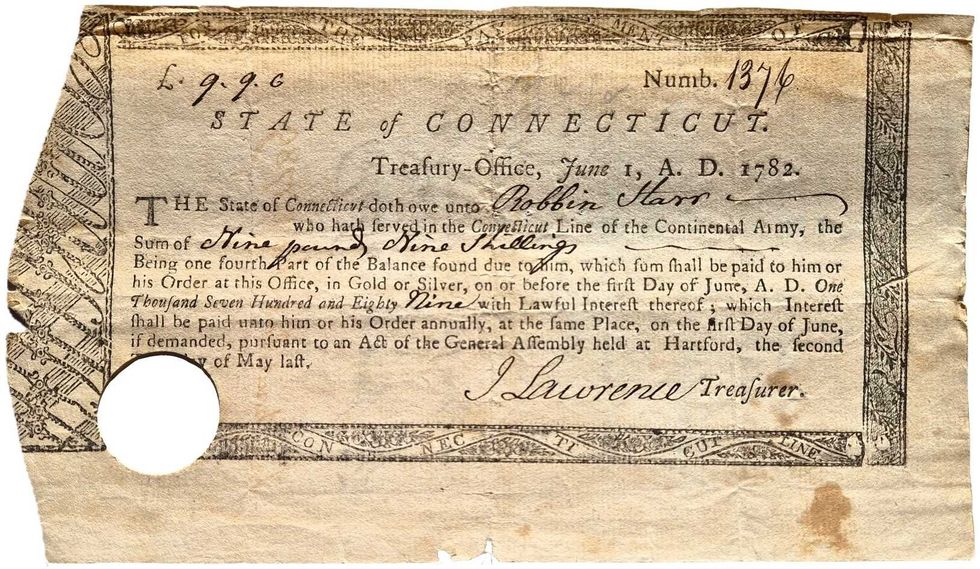 Pay Bill for Robin Starr’s service in the Continental Army.Courtesy the Alex Breanne Corporation
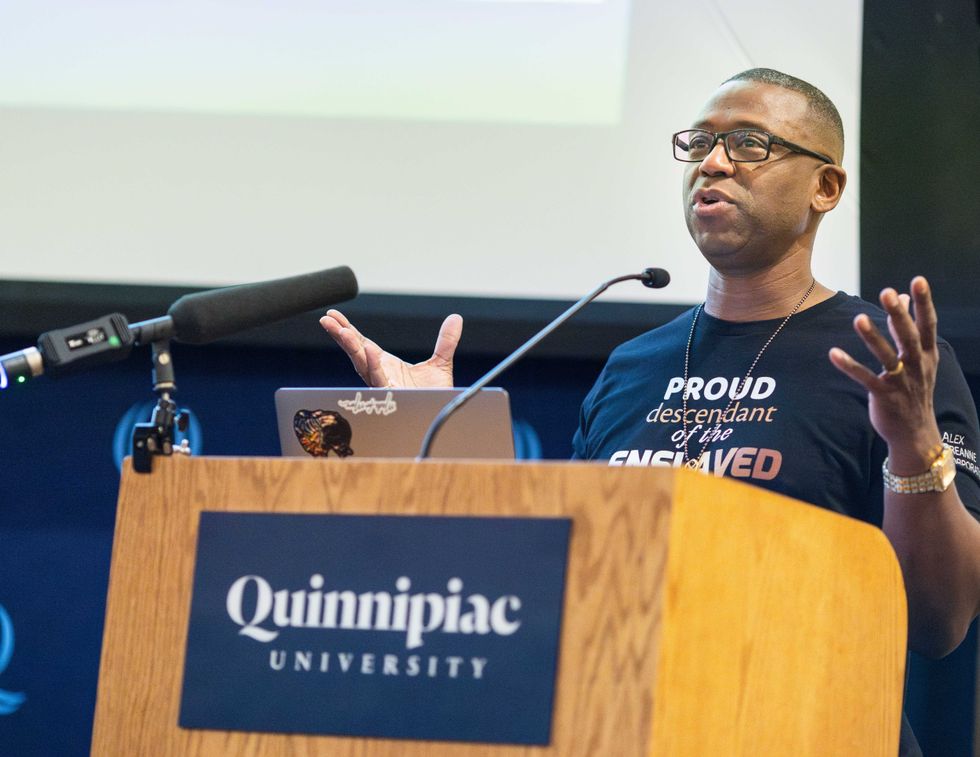 John Mills speaking at Quinnipiac University.Courtesy the Alex Breanne Corporation
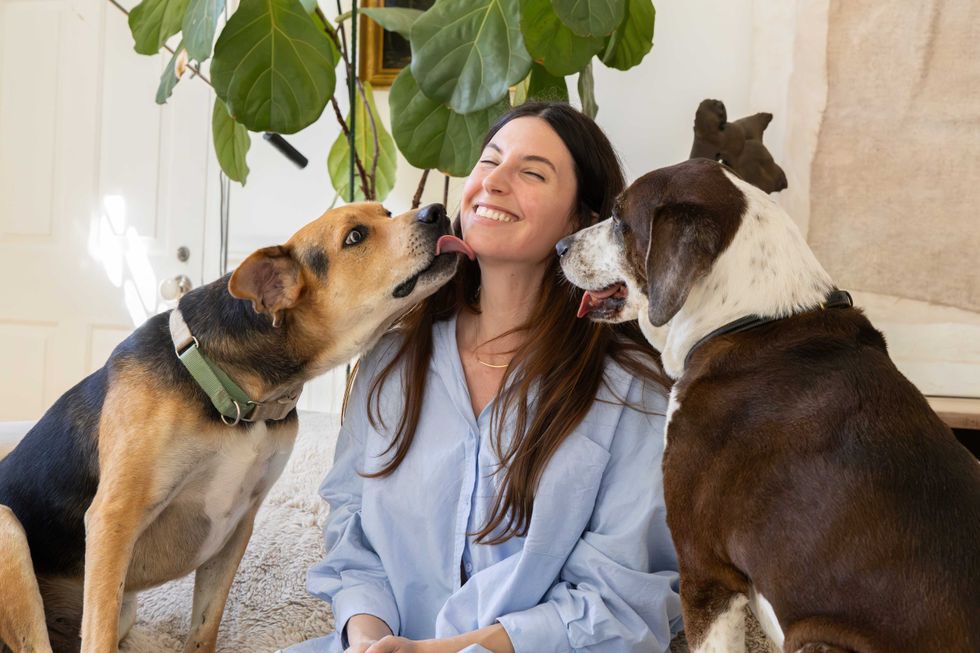 Stephanie Saetta,with her rescue dog George and Blue (left), a shepherd mix awaiting his forever home.Madi Long
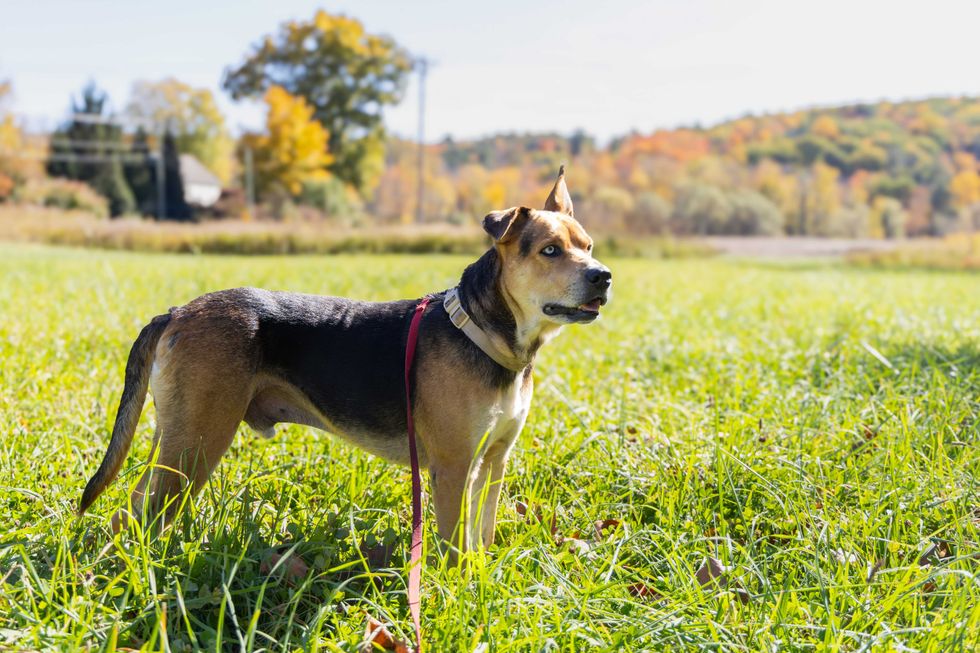 Blue, a 7 year-old Shepard mix, is waiting for his forever home. Madi Long