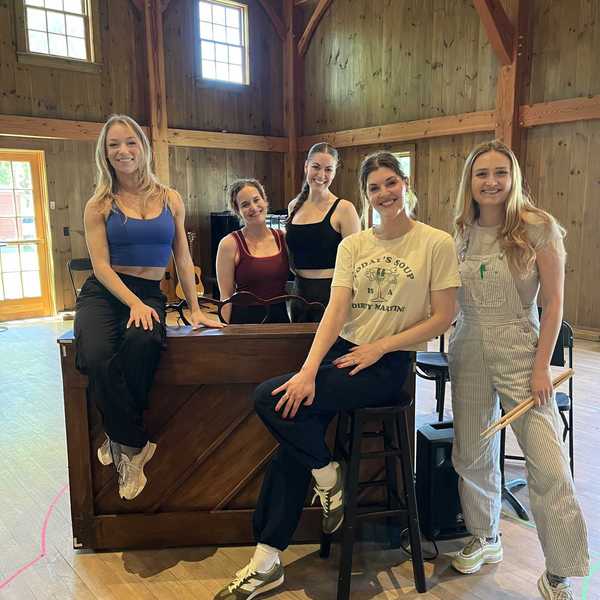
The Berkshire Theatre Critics Association will celebrate the region’s theatrical achievements at its 10th annual Berkshire Theatre Awards, known as the Berkies, on Monday, Nov. 9, at 7 p.m. at Shakespeare & Company’s Tina Packer Playhouse in Lenox, Mass. Sharon Playhouse received six nominations, including scenic design and choreography for “Swingtime Canteen,” acting honors for Savannah Stevenson and Michael F. McGuirk in “42nd Street,” and outstanding ensemble performance for “Come From Away.” Call 413-769-8306 for reservations.

Latest News
Blocked from learning?Students question web filters
Meadow Moerschell
Nov 03, 2026
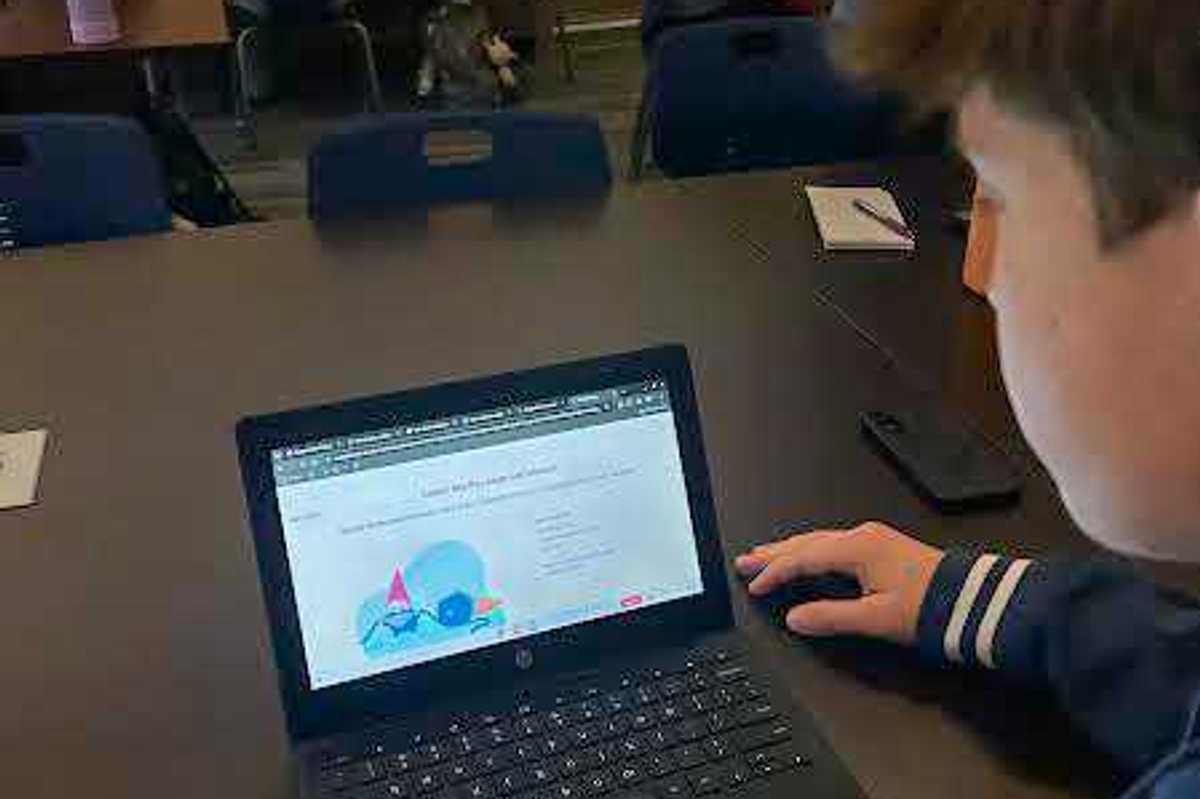
Finn Malone’s search for U.S. Sen. Dick Blumenthal is blocked because the senator’s first name triggers the school’s content filter.
Meadow Moerschell
Some Housy students have become frustrated with an online content blocking program installed on school-provided laptops that they say interferes with legitimate educational research.
Most students are familiar with “looks like this page isn’t allowed” when the content block is triggered. The system aims to block inappropriate sites, articles and videos using a list of banned keywords with the purpose of prioritizing education and keeping students safe and focused on schoolwork. Some say the policy is too broad and interferes with education, but Housy’s head of IT, Mike Ellington, said it is more permissive than policies at other schools.
“We have a much more liberal internet policy for students than most schools do,” Ellington said. “We don’t block anything from the students that we don’t also block from the faculty.”
HVRHS uses the Securly SafeSearch program, with a customizable policy that allows Ellington to select which categories to block at the direction of the school administration, which provides guidelines. The software then scans sites and searches for keywords within those selected categories, and blocks any searches or sites that contain them.
Online content blocking in schools is mandated by the federal Child Internet Protection Act. The law was enacted in 2000, requiring schools to take measures that will prevent students from seeing photos that are “obscene, child pornography, harmful to minors,” and also monitor online activities for bullying, according to information on the Federal Communication Commission’s website.
“We’re what’s left to make sure that you’re growing in the proper directions,” Ellington said. “We are ultimately responsible for that kind of protection.”
Students say the blocks are too broad. Blocking things like gambling sites can keep students on task and safe, but some students have been prevented from accessing certain sites while trying to do research for school. Some words trigger the tool, with one student noting the word “dick” prevented him from conducting research.
Finn Malone was researching U.S. Sen. Dick Blumenthal for an ECE American Politics project, only to find that the google search page was blocked after he typed “Does Dick Blumenthal take PAC money?”
“It’s ridiculous because if I want to find inappropriate content, I’ll go on my phone,” Malone said. “Not that I do, but if I did, I’ll go on my phone.”
The policy blocks keywords in categories such as pornography, gambling and bullying, aiming to keep students from viewing inappropriate content. But “websites about sexual health or including sexual terms but not containing pornography” are also blocked, according to the Securly HVRHS Student Policy.
Sophia Fitz, a senior at Housy, said she recently hit the block when trying to use her school laptop to read about an alleged gang rape at Cornell because the word “assault” triggered the program. She said she encounters the blocks regularly while trying to research things for her classes.
“You’re supposed to have access to these things,” Fitz said. “I think it’s harmful just blocking a word, like the fact that assault, that’s just a word that can be automatically blocked.
“It’s clearly getting in the way of people’s education,” Fitz continued.
Jeffery Tripp, P.E. and Health teacher, said some of his curriculum actually relies on finding bad information on the internet so he can teach students to differentiate it from good information.
“They can unblock specific sites. But the problem is, I wanted students to research, so they needed access to even bad information,” Tripp said. “Like, that was part of the task, to research what comes up early on in Google searches, what is good information, what is not.”
Health classes research content such as drugs and sexual health, which can often lead to Google searches being blocked in their entirety. Tripp said despite the initial hiccups, the school’s IT department has been responsive in unblocking content at a teacher’s request.
“I’ve always gone to IT and we’ve been able to work it out,” Tripp said. “So, I found them very helpful.” Tripp continued.
Tripp advised that students should talk to faculty when they need something unblocked for academic purposes. “Conversations can be had to make sure that our academics and our curriculum is able to be performed at the highest level,” he said.
Keep ReadingShow less
Housy sets AI rules as students debate its place in class
Daniel Lesch & Lydia Fleming
Nov 03, 2026
HVRHS teachers must disclose when they use artificial intelligence to create assignments or assess student work under an updated policy for the 2026–27 school year.
The policy also requires the school to provide instruction in AI, while leaving individual teachers responsible for explaining when students may use it in their classrooms.
The policy is a shift from prior years, when the school had no official, written policy regarding AI on the books and use of the technology by students was generally considered cheating.
Principal Ian Strever outlined the policy at the start of the school year. It appears in the updated student handbook, available on the HVRHS website.
Under the “Artificial Intelligence” section, the policy states that “the school is required to include instruction in AI.” Furthermore, it reads that the use of AI “may vary from extensive use in one course and no use of it in another.”
It is now up to individual teachers to determine when students are permitted– or not permitted– to use AI in their classroom.
The AI policy also establishes expectations for staff.
In the policy, it is expected that teachers inform students when they have used AI to generate or alter assignments that are given to students.
“In the interest of transparency, all HVRHS teachers must disclose to their students when they are using AI to create assignments and to assess student work.”
Policy rationale
Strever elaborated on why he believes it’s important to have a clear understanding, for students as well as faculty, of the pros and cons of using AI.
“You’re in a sociology class, for instance, but you have a huge database of statistics that you want to go through,” Strever said. “AI is a fantastic tool for processing some of that statistical data that’s not really the focus of the course. So I think in those kinds of situations, you need to have the ability and the autonomy to use that as a tool.”
Strever pointed to certain courses and areas where any use of AI, dependent on the specific course instructor, is prohibited.
Strever explained the parallel policy at Housatonic, with one side of the policy completely restricting the use of artificial intelligence. “The act of writing” Strever explained,“it’s a reflection of the care with which you have looked at your subject and the understanding of it. And it’s really difficult or impossible to assign any part of that to AI.”
Teachers implement their own policies
This year, students participating in ECE Human Rights, Perspectives on Democracy, U.S. History, Psychology, and Sociology were all given an agreement to sign by their teacher, John Lizzi. The contract explicitly outlines that any use of AI, unless told otherwise, is forbidden. Students also acknowledged on the form that if caught, any pleading of ignorance would not be accepted as an excuse.
The policy was written by Lizzi, as well as English department chair Damon Osora. Both humanities teachers, Lizzi expressed concern over how AI impacted student learning, and specifically the writing process.
“We felt that it was within our power and the right thing to do to really take a firm stance about its use,” said Lizzi, “and so we put forward a policy in our classes that there is to be no use of AI.”
Lizzi acknowledged that appropriate AI use varies by subject, saying that “there is a use for AI in certain fields, stem fields, for example. But I think it would be reasonable to say that every class and teacher should very specifically outline how AI is to be used and how it’s not to be used.”
The HVRHS Student Handbook corroborates both Lizzi’s and Strever’s accounts, with it written that the use of AI will “vary from course to course,” it reads, adding that “this may vary from extensive use in one course and no use of it in another.”
School staff said additional guidelines may be needed as AI technology evolves.
Student perspectives
Students have mixed feelings about the new AI policy, with most students who were interviewed saying AI should not be used in school whatsoever, due to a negative impact on reasoning and writing abilities.
Julliete Trabucco, a junior in both ECE U.S. History and AP Literature, is one of many students generally opposed to the use of AI. “Other students are putting in the work to complete the assignment,” Trabucco said. “If you’re just using AI, it’s like taking the shortcut.”
Students were asked if there was any benefit to using AI, either in school or out of it, and their responses were primarily against AI use in general. Most students interviewed said AI use in schools is both unnecessary and hinders the learning process, and that there are no acceptable ways to use AI in a school setting.
Skylar Brown, a freshman, has specific concerns about generative AI. Generative AI is a blanket term for tools that create images or videos from user prompts. Brown said she’s concerned about its impact on the environment and its effect on users.
Students like Brown expressed environmental concerns, due to the mass amounts of water that AI needs in order to cool data centers. In 2023, about 17.4 billion gallons of water were used, or about 268 million bathtubs, according to Lawrence Berkeley National Laboratory.
“It’s not good for the environment,” Brown said. “And when people are relying on it a lot, it becomes less of, like, a tool that’s supposed to be helpful.”
While most students at HVRHS seem to be against using AI in general, there are some who have continued to use AI.
Henry Skuza, a Junior in Dr. Lizzi’s US History class said some students who had signed the AI agreement at the beginning of the year had been caught for using the technology on assignments.
Skuza said he believes the students’ punishment should be tied to their honesty after being caught.
“If you lie about it, then I think it should be more harsh,” Skuza said. “But if you do get caught and you’re like, ‘yeah, I did it,’ then you just have to rewrite it in your own words.”
Some students see the benefits of AI in the classroom, but solely for research purposes rather than generating ideas. Some students use platforms like Gemini Notebook as study tools or for research.
Eliana Lang said AI could be useful for some studying tasks.
“Maybe creating a study guide or something or explaining something,” Lang said. “But not to do actual work.”
Keep ReadingShow less
A day at the theater
Lakeville Journal
Nov 03, 2026
Provided
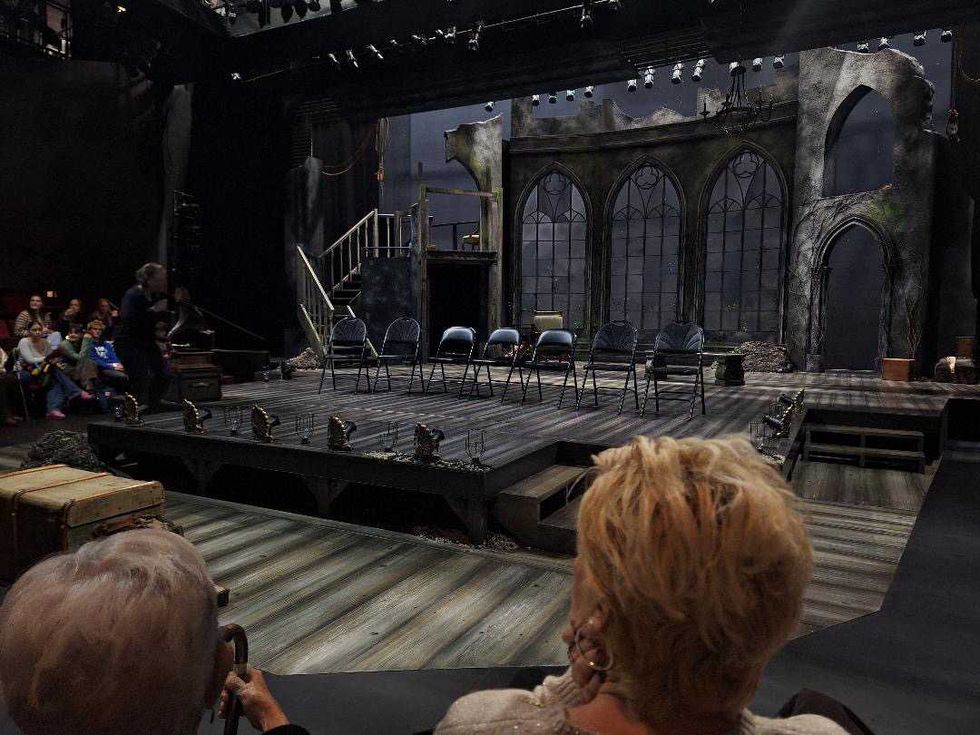
Students in Housatonic’s AP Literature class traveled to Hartford on Wednesday, Oct. 28, to see a live production of Dracula at the Hartford Stage theater. The production is a reimagining of the classic Bram Stoker tale arranged by playwright Morgan Lloyd Malcolm.

Want more of our stories on Google? Click here to make us a Preferred Source.

New digital hall passes draw pushback at Housy
Lydia Fleming
Nov 03, 2026
Housatonic Valley Regional High School introduced a new digital hall pass system on Oct. 19, drawing student complaints about bathroom access and increased monitoring.
Assistant Principal Steven Schibi announced the new system in an email to the student body on Oct. 15. The email said students would soon be required to request to leave a classroom through a website using their Chromebook laptops. The website is a product of education tech company Securly, which is also responsible for the web content monitoring system that Housatonic uses.
The system has also raised concerns about its effect on trust between students and teachers.
Students must now use an online form to log their intended destination and the estimated time the trip will take. Students can also leave comments on the request for teachers to see. The hall pass requests are then logged in a database teachers and administrators can use to locate students in case of an emergency, Principal Ian Strever said.
In previous years, hall passes have consisted of students requesting to go to other teachers’ rooms and filling out a physical, paper pass that the teacher would then sign. But for most students and teachers, the hall pass system had become relaxed and relied mostly on a teachers’ trust in students. Administrators contend that trust was abused, and students spent too much time outside the classroom, an issue the new digital system is intended to fix.
“It is designed to maximize their time in class,” Strever said.
Strever said a database such as the Securly hall passes allows administration and teachers to know where to locate students if and when an emergency arises.
”If we have a tool like this, that may take a little bit longer for students to fill out a pass, but it results in something, some data that we can use, information that we can use to make our school safer,” Strever said. “That’s where as an administrator, I think it’s my responsibility to make that happen.“
Some students have pushed back against the digital hall passes, protesting their use. Many students have complained that the digital form is overly time consuming and has prevented some from using the bathroom in times of need. A senior at Housy, John DeDenato, has plastered QR codes around the school in order to conduct a survey on the new system.
“This new electronic hall pass system does nothing but enforce what is essentially a threat to students,” one student wrote in the anonymous survey. “It feels dystopian, as if we are being monitored constantly and don’t even have the freedom to go to the bathroom without a teacher’s permission.”
According to the survey, many of the students are upset about the new hall passes. Menstrual cycles were often brought up when students were asked to give feedback.
“I hate the new hall pass system, for example when I was on my period the other day I was literally bleeding out while I was waiting the entire class to get accepted to go to the bathroom,” another student said in a survey response. “As I repeatedly asked to go to the bathroom the teacher repeatedly said no to opening their chromebook so I could go release myself. I’m very disappointed.”
Teachers said changes in school policy often trigger strong initial reactions from students that fade over time.
When asked about students’ reactions, Luke Vermilyea, a new teacher at Housy who has worked with the Securely digital hall pass in his previous school, said his former students’ strong feelings about the policy quickly faded.
“We had some students who were maybe a little bit frustrated with it at first,” he said. “Once the system got going and once students had used it, for a week or two [...] I didn’t hear anything negative about it for the rest of the year.”
Damon Osora, an English teacher and department chair, said the hall passes could affect students’ and teachers’ view of one another. He said trust is a fundamental aspect of collaborative relationships. “If you build good relationships with students, they’re going to refrain from behaviors that break that trust or change that really healthy relationship that they have with you as a teacher or an administrator,” Osora said.
Keep ReadingShow less
Girls soccer team ranked first in Berkshire League at season’s end
Grace Graney
Nov 03, 2026
Housatonic girls soccer players celebrate their win against Lakeview in the final game of the Rivalry Night series at home on Oct. 23.
Provided
The Housatonic girls varsity soccer team went undefeated in both “under the lights” games against longtime rival Lakeview.
Currently, the team holds first place in the Berkshire League with a season record of 14-2, guaranteeing a spot in state championships this year.
Housatonic senior and team captain Carmela Egan was excited by the team’s performance despite losing two players to an FFA trip, with one being a starting team captain.
For the third year in a row, Housatonic continues to keep its annual “Rivalry Night” tradition going with Lakeview High School, where the boys and girls play double header games under the lights. Currently, two Rivalry Nights take place each sports season, with each one held at Lakeview and Housatonic on separate nights.
“Rivalry night was so awesome,” Egan said, referring to the game at Lakeview. “We kept playing hard and after the first two goals we were just on fire and so hyped up. We play really well with big crowds and under pressure, I think it’s when we perform best.”
The first Rivalry Night game took place at Lakeview’s soccer field on Oct. 3. Housy won with a final score of 3-0.
Sophomore varsity starter Lainey Diorio said the rivalry night games were some of her favorites every season. “I think they’re so fun,” Diorio said. “All the people are there, from Housy and from Lakeview and everyone is cheering you on, and it’s just a good environment.”
After the big win at Lakeview, Housatonic hosted the longtime rival on Oct. 23. Despite the cold temperatures — with lows around 30 degrees — the girls kept their record and ended the game with a final score of 3-1.
While the girls were up 3-0, Lakeview had scored a goal toward the end of the game.“You could tell that we were tired when they scored on us,” Egan said.

The victories come at a time when the team is rebuilding following the departure of some key players last year.
The team’s current roster has made a special effort to maintain consistency after star players Madeline Mechare and Ava Segalla graduated last spring, Diorio said.
“I think we’ve come to adapt to it,” Diorio said. “I think, in the beginning of the year, we started off a little rough which is obviously what we expected because we were losing two really good players from last year. But I think we adapted toward the end of the season and found who works well together.”
Looking into the last few weeks of the season ending in the middle of November, the Housatonic girls soccer team will leave the 2026 season with both wins from Rivalry Night, as well as a strong placement in the Berkshire League.
Diorio is optimistic about the end of the season.
“Hopefully, we will win BL, win our game on Friday, which would put us in finals for the BL tournament,” she said. “I expect us to be able to beat Thomaston again.”
Egan praised her teammates’ abilities, despite the loss of strong players.
“Losing the two seniors last year definitely hurt us,” Egan said. “But we’ve had so many floaters and JV members stepping up and I think we are just as strong, if not stronger than last year.”

Keep ReadingShow less
Housatonic Valley FFA charts big wins in spring competitions
Grace Graney
Nov 03, 2026
The Housatonic boys soccer team poses for a team photo after a home game.
Provided
Housatonic’s boys soccer team ended the 2025 season in a probationary period after receiving two red cards for arguing with referees and inappropriate language.
Players must now abide by an action plan created by the team and coaches or risk losing their opportunity to qualify for championships at the end of the season, said Gustavo Portillo, one of the team captains this year.
While on probation, the team captains must conference with referees before every game. The goal is to rein in unsportsmanlike conduct and “trash talk” during the game, Portillo said. Players who behave poorly could face consequences ranging from sitting out for the rest of a game to suspension from the team, athletic director Anne MacNeil said.
Racking up more than one red or more than five yellow cards in the season would have consequences for the whole team. Portillo said the team would lose its ability to qualify for state championships at the end of the season.
Looking back on the 2025 season, one game in particular stood out to Portillo.

“The BL final against Nonnewaug, where we got two of those from one player,” Portillo said. “And then they got a red, which made three cards.” Counting a total of two yellow cards and one red, the player was benched for the rest of the game as well as suspended for the following game.
“Out of the 176 boys soccer teams in the CIAC class conference, only five teams in the state of connecticut were placed on probation. We were the first Berkshire League to be ever placed on probation,” MacNeil said.
The Berkshire League consists of eight teams primarily located in Litchfield County, Connecticut.
So far during the 2026 season, Housatonic has maintained a clean record with zero red cards. Looking ahead, team leadership hopes to maintain these sportsmanship habits even after the probation period officially ends.
“I am proud of how our captains have stepped up this year and take this seriously,” MacNeil said.
Keep ReadingShow less

Want more of our stories on Google? Click here to make us a Preferred Source.

loading